Complete Guide to Multichannel Inventory Management


Discrepancies between physical stock and inventory records are frequently identified as the cause behind overselling. The question then is, how can businesses avoid this “phantom” inventory? That’s exactly what this article will identify, as well as why these inaccuracies can be so costly down the line.
In many cases, the root cause is not a single warehouse mistake. It is the handoff between systems and partners. That is why some brands aim for tighter coordination across fulfillment, carriers, and warehouses, either through internal operations or through third party(3PLs) and fourth-party logistics providers (4PLs) that coordinate multiple vendors under one plan.
There are key process improvements that help reduce overselling risk, and logistics visibility also has a significant role to play. By tackling inventory accuracy from multiple angles, phantom inventory can, in fact, become a phantom problem.
Phantom inventory is usually experienced through four doomed words: “we can’t find it.” The system shows 10 units, but only 3 have been located in the warehouse. The search begins for the missing 7 while angry customer emails clutter the support desk inbox.
The smallest mismatch between the listed inventory and what’s in the warehouse can cause a chain of negative reactions across a business, such as:
At best, overselling means that an order is delayed. Worst case scenario is that it must be cancelled altogether. In the crowded e-commerce landscape, both instances threaten a key part of staying competitive with customers: trust.
Trust is what maintains customer attention, garners positive online reviews, and is largely shaped by how reliably and quickly a retailer can deliver orders. Any breakdown in that process breaks that experience and can mean that other potential orders are lost down the line.
Inaccurate inventory data also means inaccurate forecasting. If data systems are using incorrect figures to predict re-ordering or how much demand to prepare for, businesses can miss out on the valuable insights and financial savings these systems should otherwise provide.
This is particularly concerning in light of the December 2025 McKinsey report that flagged how important dynamic demand forecasting is to many who are navigating current supply chain instability.
Cash planning decisions and general financial reporting can’t be accurate when inventory tracking isn’t. For example, a business may be running on the notion that they have thousands in the warehouse in the form of inventory assets when, in reality, those assets don’t exist.
Constantly trying to track down missing items in a warehouse can be extremely costly. It steals precious labor hours and energy that can then result in other orders being slowed and customers being kept waiting for longer than necessary.
The response that many take to instances of overselling is to quickly replenish the missing stock so that orders can still be met. The problem is that this puts a huge amount of pressure on the supply chain, especially during busy seasons. Getting stock last-minute on a tight delivery deadline can incur bigger logistics charges and cause delays that only add to the overall costs incurred by the original instance of inventory inaccuracy.
Automated ad services rely on inventory numbers to determine what to promote when. Phantom inventory can very well mean that businesses are pouring money into marketing for stock they don’t actually have, creating even bigger losses than might be evident at first glance.
When a stock mismatch is found, the hope is that it’s a system error. Whatever the outcome, any occurrence of phantom stock reflects a system that isn’t working as intended. Here are the key processes that retailers can improve to increase inventory accuracy and reduce overselling risk:
Sometimes the problem isn’t that a process has failed but that the interlinked points between each process have broken down. That’s why 4PL providers and their commitment to an integrated supply chain have gained so much traction. By centralizing the management of everything from warehousing to transportation, businesses can significantly reduce the “lost in translation” errors that often lead to overselling.
Divide inventory into “received” and “available” and only graduate items to the latter once they’ve been through QA verification, blind counts, and barcode scans. The stricter these controls, the lower the risk of having overstated inventory.
Unprocessed returns are often at the center of an overselling crisis. To prevent returns from distorting inventory numbers, it’s vital that they be inspected within a day or two of being received and only after that, added as sellable stock.
High-velocity SKUs are often at the highest risk of overselling, and one of the best ways to mitigate that risk is by ensuring more frequent cycle counting for those items, especially during peak seasons.
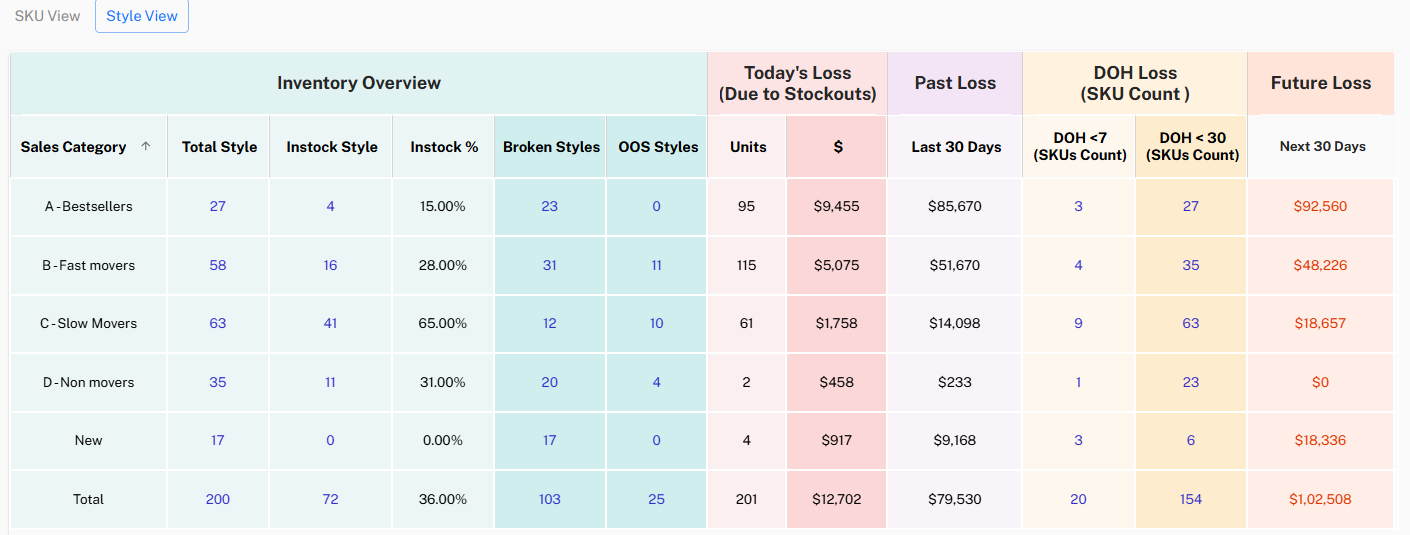
Looking at inventory only in units available can be misleading. High stock levels don’t reveal whether inventory is healthy, excessive, or nearing stockout.
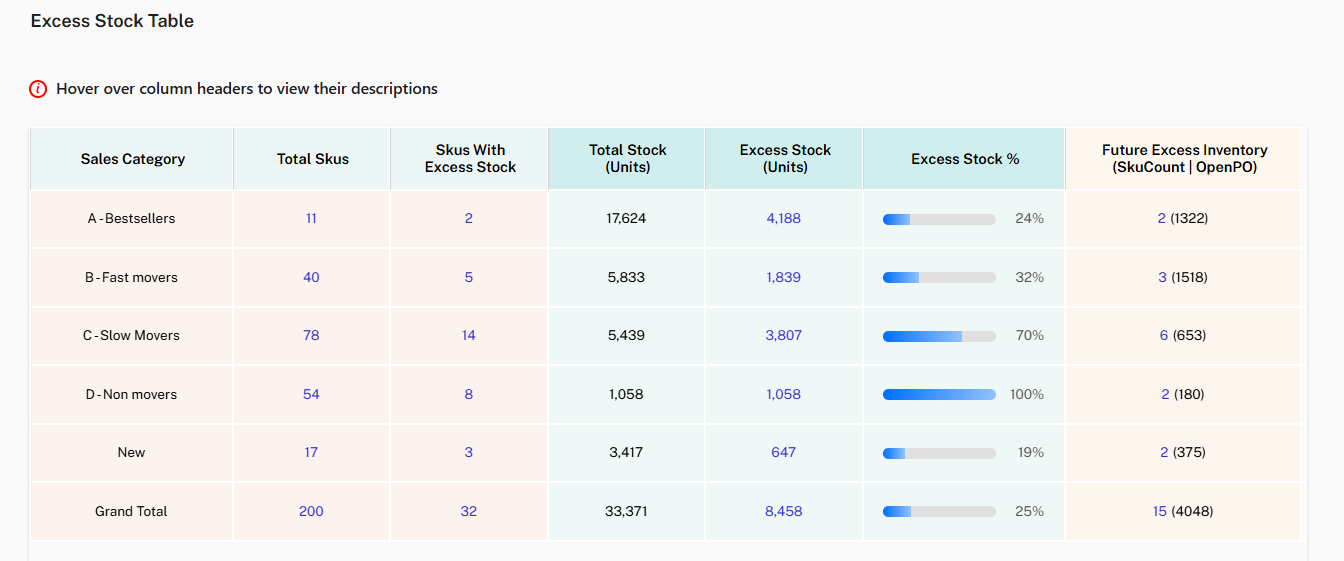
A better way to understand inventory health is by using Inventory Days on Hand (DOH) — a metric that converts stock into the number of days it will last based on sales velocity.
For example:
Another useful metric is identifying excess inventory across ABC classifications. ABC classification groups products based on their contribution to overall sales or revenue. When inventory levels are viewed alongside these categories, businesses can quickly identify problems such as:
Real-time visibility ensures inventory is tracked across every stage—inbound, reserved, in transit, or sellable—not just “in stock” or “out of stock.” This removes blind spots where inventory mismatches typically occur, reducing risks like overselling and phantom stock.
While processes keep data accurate, continuous visibility ensures it stays accurate as inventory moves, making availability more reliable.
.png)
.png)
.png)