
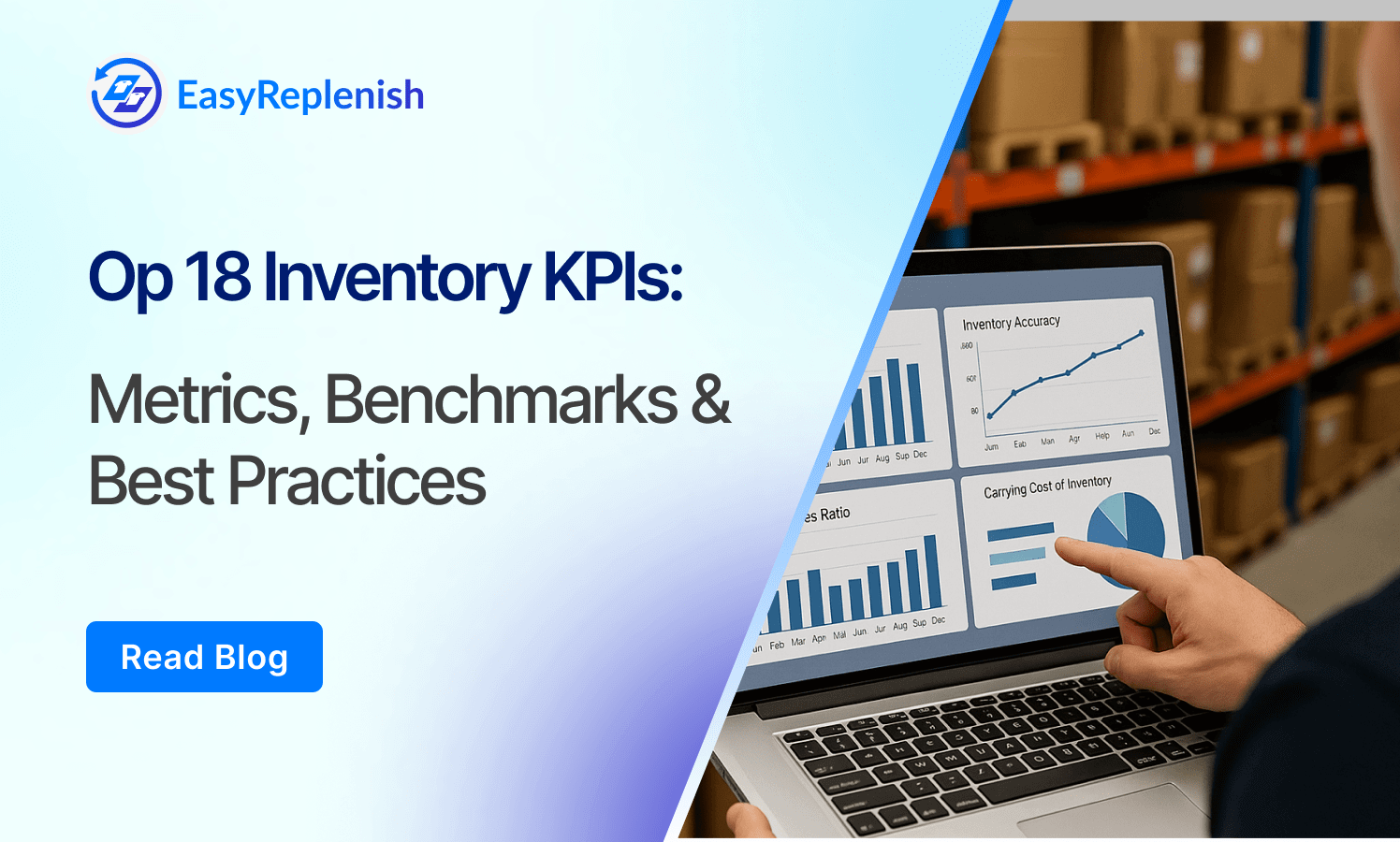
Top 18 Inventory KPIs: Metrics, Benchmarks & Best Practices


For modern D2C (direct-to-consumer) brands, inventory management has become a high-stakes balancing act. Unlike traditional retail models, D2C brands handle everything—from demand generation and order fulfillment to last-mile delivery—often across multiple channels and geographies. In this environment, manual or rule-based inventory methods struggle to keep up with real-time shifts in consumer behavior, marketing campaigns, and supply chain variability.
This is where Artificial Intelligence (AI) is fundamentally changing the game. By turning raw operational data into predictive insights, AI enables brands to anticipate demand, automate replenishment, and optimize stock levels with remarkable precision. Instead of reacting to what already happened, AI allows businesses to forecast what’s about to happen—and act on it instantly.
From dynamic forecasting models that adjust to seasonality, to automated reorder systems that balance holding costs and service levels, AI is redefining how D2C brands plan, execute, and scale inventory. In this article, we’ll explore how AI is transforming inventory management, the technologies driving this shift, and the measurable impact it’s creating for fast-growing D2C businesses.
Inventory analytics powered with
smarter forecasts

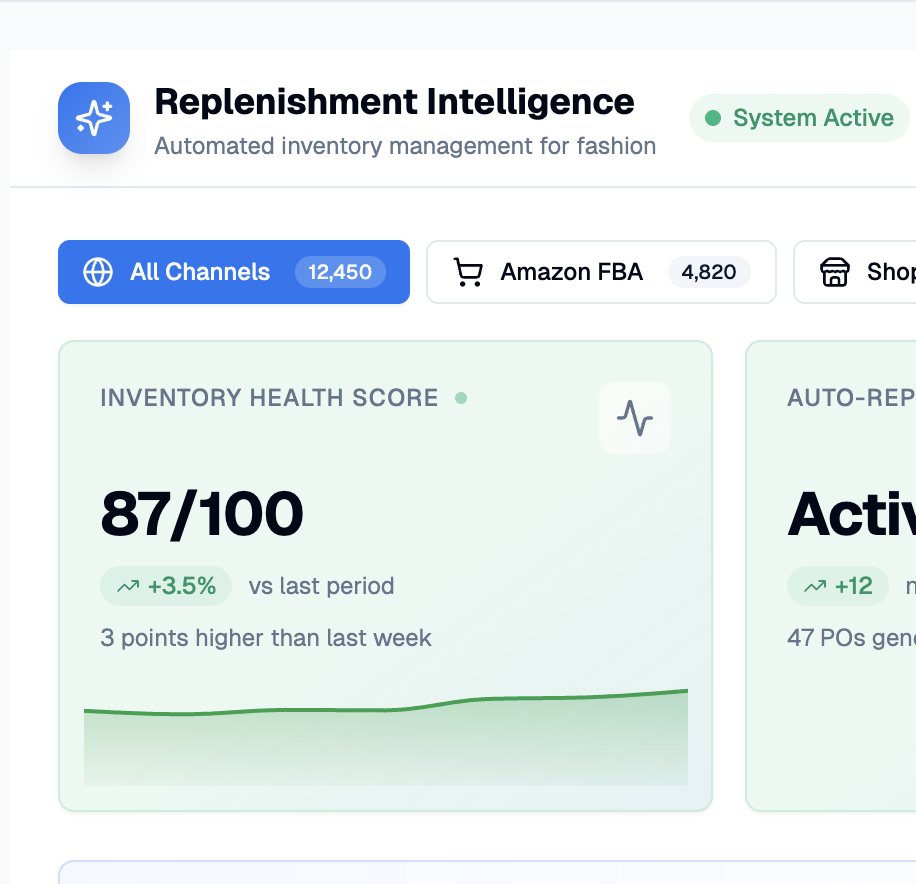
Traditional inventory management was built for predictable retail environments — not the real-time, demand-driven nature of modern D2C brands. Static spreadsheets, manual reorder points, and rule-based systems struggle to keep up with the speed and complexity of today’s digital-first commerce.
For D2C brands, even small planning lags can have outsized consequences. Overstocking traps working capital in slow-moving SKUs, inflating storage and depreciation costs. Stockouts, on the other hand, erode customer trust, damage retention, and lead to lost revenue — especially when consumers expect fast delivery and product availability 24/7.
AI-powered inventory management is redefining how D2C brands plan, allocate, and replenish stock. Instead of relying on static rules or backward-looking spreadsheets, AI systems integrate real-time data from sales channels, marketing campaigns, logistics partners, and supply chain operations to make decisions dynamically.
By combining multiple data streams — including sales velocity, marketing spend, web traffic, seasonality, and fulfillment lead times — AI creates a unified visibility layer. This allows brands to anticipate demand fluctuations and automate critical actions like reordering, allocation, and safety stock adjustments — without human guesswork.
The biggest leap lies in intelligent replenishment. AI doesn’t just restock based on thresholds; it senses demand in advance. For instance, a surge in ad engagement or influencer-driven sales can trigger early reorder recommendations. Similarly, if regional demand drops, the system can slow replenishment or suggest redistributing stock across warehouses — minimizing both excess and shortage risks.
The impact extends across operations:
In short, AI-powered inventory management transforms decision-making from reactive to predictive — giving D2C brands the agility to operate at the same precision and scale as enterprise retailers, but with far greater flexibility.
AI-driven forecasting shifts inventory planning from reactive to predictive.
Instead of relying solely on historical sales averages, AI models integrate multiple data streams — including past sales trends, seasonality, marketing campaigns, website traffic, and even social sentiment — to forecast demand more accurately.
For D2C brands, this is a game-changer.
A skincare brand, for instance, might see sales spikes following influencer campaigns. Traditional systems miss these shifts until it’s too late. AI, however, learns from previous promotional uplift and anticipates demand surges before they occur, enabling timely replenishment and procurement planning.
Under the hood, machine learning models like gradient boosting or deep neural networks detect complex demand patterns across SKUs, categories, and regions. This not only improves forecast accuracy but also allows smarter allocation and inventory distribution.
In short: AI transforms demand forecasting into a proactive, insight-driven system that aligns stock levels with real-time customer intent.
AI automates the most time-sensitive part of inventory control: when and how much to reorder.
It continuously monitors sales velocity, lead times, safety stock, and supplier performance to trigger replenishment decisions automatically — reducing both overstocking and stockouts.
For example, a D2C apparel brand can leverage AI to detect rising SKU velocity in specific regions. The system can then auto-adjust reorder frequency or shift stock between warehouses to meet localized demand — all without manual intervention.
The system’s strength lies in context-aware decision-making.
It differentiates between temporary demand spikes (like flash sales) and sustained growth, ensuring that restock levels are both data-backed and cost-efficient. Paired with EOQ-based optimization, AI ensures that replenishment minimizes carrying cost while maintaining service level targets.
Outcome: Higher inventory turnover, lower carrying costs, and improved stock health — achieved through autonomous, continuous optimization.
D2C brands often manage multiple fulfillment nodes — own warehouse, 3PLs, marketplaces, and retail pop-ups.
AI-powered systems unify this fragmented data to provide a real-time, centralized inventory view across all channels.
Instead of static stock reports, AI connects POS data, warehouse feeds, and order management systems into one live dashboard. This means every stakeholder — from marketing to fulfillment — sees the same, updated stock status, enabling faster, more accurate decisions.
For omnichannel brands, this eliminates costly blind spots like overselling or duplicate stock reservations. It also supports intelligent order routing — automatically shipping from the location with the lowest cost-to-serve or fastest delivery time.
The result: fewer fulfillment errors, improved customer experience, and tighter operational control.
AI doesn’t just optimize stock levels — it optimizes how inventory is priced and promoted.
By linking inventory health, sales velocity, and demand forecasts, AI-powered systems dynamically adjust pricing to balance turnover and profitability.
For instance, if a D2C footwear brand sees slow-moving SKUs with rising carrying costs, the AI system can automatically recommend a targeted discount or bundle promotion before those items become deadstock. Conversely, during high-demand periods (e.g., festive sales or viral campaigns), it can raise prices slightly to maximize margins while maintaining sales momentum.
These systems also analyze promotion elasticity — learning which campaigns drive true incremental demand versus margin erosion. This allows brands to align marketing and inventory strategies in real time, ensuring every campaign supports stock objectives rather than distorting them.
In essence: AI turns pricing into a dynamic, data-driven lever that helps brands move inventory faster and smarter — without eroding brand value.
AI extends visibility beyond your warehouse — deep into your supply chain and vendor network.
By analyzing historical supplier data such as on-time delivery rates, defect counts, and average lead times, AI models can identify performance patterns and flag potential risks before they impact fulfillment.
For example, if a supplier consistently delivers 2–3 days late, AI can adjust future forecasts and auto-suggest buffer stock or alternate sourcing options. Over time, these models learn which vendors are reliable under seasonal pressure or regional disruptions, helping procurement teams make smarter, risk-adjusted decisions.
Some advanced systems even simulate what-if scenarios — such as port delays or raw material shortages — to predict fulfillment impact and recommend proactive mitigation (e.g., split orders, early POs, or supplier diversification).
Outcome: Fewer production delays, stronger supplier accountability, and a more resilient, data-informed supply chain.
Inventory analytics powered with
smarter forecasts
Adopting AI in inventory management isn’t a single switch — it’s a phased evolution from manual or rule-based systems to intelligent, automated decision-making. For D2C brands, successful implementation requires clarity, clean data, and measurable goals.
Before any AI model can perform, it needs reliable inputs. Start by auditing your sales data, channel performance, SKU master, supplier lead times, and fulfillment logs.
Identify gaps such as missing timestamps, duplicate SKUs, or inconsistent sales records across channels. AI thrives on structured, historical data — so the quality of your data directly dictates the accuracy of your forecasts.
Pro tip: Tag campaign-driven sales spikes or one-time bulk orders as “anomalies,” not standard demand, to prevent model bias.
Select an AI-powered platform that integrates seamlessly with your existing systems (Shopify, ERP, WMS, CRM, etc.).
Look for solutions offering demand forecasting, dynamic replenishment, and real-time visibility. Evaluate tools based on model transparency, customization flexibility, and the ability to handle multi-channel complexity.
For example, a platform like EasyReplenish allows brands to link historical demand, promotional calendars, and supplier constraints to generate replenishment recommendations automatically.
Define clear, trackable KPIs to assess impact — start with:
Baseline your current numbers, then use AI insights to drive measurable improvement. These metrics will help justify ROI and guide refinements in model configuration.
Pilot the AI system with a limited SKU set or one fulfillment region.
Validate outcomes over 2–3 inventory cycles — track improvements in forecast accuracy, order frequency, and stockout rates. Once performance stabilizes, expand the scope across SKUs, channels, and suppliers.
This controlled rollout ensures teams trust the system, reduces disruption, and allows you to continuously fine-tune AI recommendations before full deployment
AI-driven inventory management is no longer theoretical — it’s proving measurable ROI across D2C industries, from apparel to beauty to home goods. Below are a few concise but impactful examples that illustrate how automation and intelligence are reshaping growth, efficiency, and resilience.
A mid-sized D2C apparel label selling across Shopify, Amazon, and its own website faced frequent stockouts during campaign peaks. Their legacy process used static reorder levels and manual updates every two weeks.
After adopting an AI-powered forecasting and replenishment system, the brand started integrating sales velocity, marketing calendar data, and channel-level demand. Within 90 days, stockouts dropped by 30%, while turnover improved by 18%.
The system also auto-suggested purchase orders for top sellers and slowed replenishment for declining SKUs — freeing the operations team from reactive firefighting.
Key takeaway: Predictive AI can turn reactive inventory management into a proactive engine that aligns marketing, demand, and supply.
A D2C skincare brand operating with over 500 SKUs across 4 warehouses struggled with overstocking and cash flow blockage. The company adopted an AI-driven replenishment engine that recalibrated safety stock levels weekly using real-time sales data and supplier lead-time variability.
The result? Working capital tied in inventory fell by 25%, and carrying costs dropped by nearly 15%. At the same time, the brand maintained a 97% fulfillment rate, proving that efficiency doesn’t require risk.
By blending machine learning forecasts with operational discipline, the brand turned its supply chain from a cost center into a strategic advantage.
Inventory analytics powered with
smarter forecasts
For modern D2C brands, inventory isn’t just an operational function — it’s a growth lever. The days of manual spreadsheets, static forecasts, and reactive replenishment are fading fast. As customer expectations rise and product lifecycles shorten, AI-powered inventory management is becoming the difference between brands that scale sustainably and those that stagnate.
By connecting sales, marketing, and supply chain data into one intelligent loop, AI enables faster decisions, fewer stockouts, leaner inventories, and healthier cash flow. It doesn’t replace human judgment — it amplifies it, giving operators real-time insights that drive precision rather than guesswork.
The brands leading the next decade of D2C growth will be those that adopt AI early, iterate continuously, and treat inventory as a strategic differentiator — not just a cost to manage. The shift to intelligent, automated inventory management isn’t optional anymore; it’s the foundation of staying agile, profitable, and customer-first.



.png)
.png)
.png)
