Best Mobile Inventory Management Software: Features & Benefits


Fashion is one of the most demanding verticals in ecommerce. Customers expect rich product visuals, accurate sizing, lightning-fast checkout experiences, and seamless returns, all while brands battle thin margins, high return rates, and unpredictable inventory cycles.
The good news? Shopify's app ecosystem has matured to the point where almost every operational pain point has a purpose-built solution. The challenge is choosing the right ones.
Below is a curated stack of seven categories, with one standout app deep-dived per category and a few worthy alternatives to keep on your radar.
Whether you're a launching DTC label or a scaling apparel brand, this stack forms the backbone of a high-performing fashion storefront.
Fashion sells on visuals and variant clarity. Shoppers need to see exactly what they're getting in the right color, size, and fit before they commit.

Swatch King transforms standard dropdown selectors into beautiful color swatches and image variants across your collection and product pages, dramatically improving how customers explore your range.
Key features:
Other strong options in this category include Variant Image Automator and Kiwi Size Chart.
The average fashion shopper rarely buys just one item if presented with the right complementary suggestion at the right moment. This category exists to lift average order value without feeling pushy.
Rebuy is the most sophisticated personalization engine in the Shopify ecosystem, using AI to power upsells, smart cart recommendations, and dynamic bundles tailored to each shopper.
Key features:
Other apps worth considering are Frequently Bought Together and LimeSpot.
For fashion brands juggling seasonal collections, fast-moving SKUs, and slow-moving inventory tails, smart replenishment is non-negotiable.

EasyReplenish automates the painful process of forecasting stock needs based on sales velocity, supplier lead times, and historical patterns, freeing up working capital that would otherwise sit on shelves.
Key features:
For fashion brands managing dozens of suppliers and hundreds of variants across seasons, it brings much-needed clarity to buying decisions.
Shopify's native analytics are useful but rarely deep enough for fashion brands tracking cohorts, LTV, channel attribution, and product-level profitability.
Triple Whale has become the go-to analytics platform for DTC brands running paid media, unifying data from every channel into a single dashboard with attribution modeling that actually makes sense.
Key features:
Other apps worth exploring in this space include Lifetimely and Daasity.
Acquiring a fashion customer is expensive. Retaining them, segmenting them, and reactivating them is where margin actually lives.
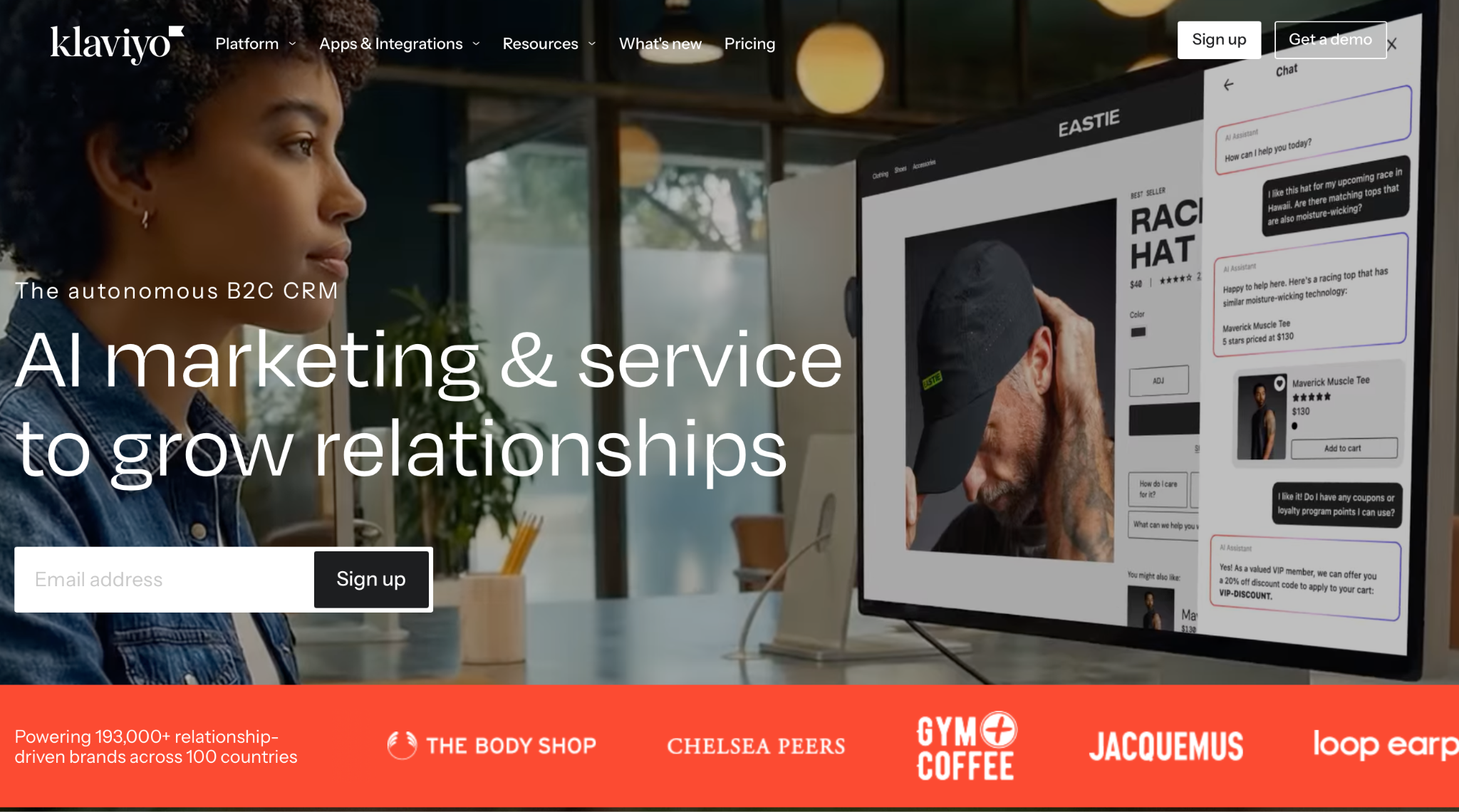
Klaviyo remains the gold standard for email and SMS marketing in ecommerce, with deep Shopify integration and predictive analytics that allow fashion brands to run highly sophisticated retention flows.
Key features:
Other strong options include Omnisend and Postscript.
Fashion is a trust purchase. Shoppers want to see real people wearing your products in real lighting before they buy, especially for first-time orders.
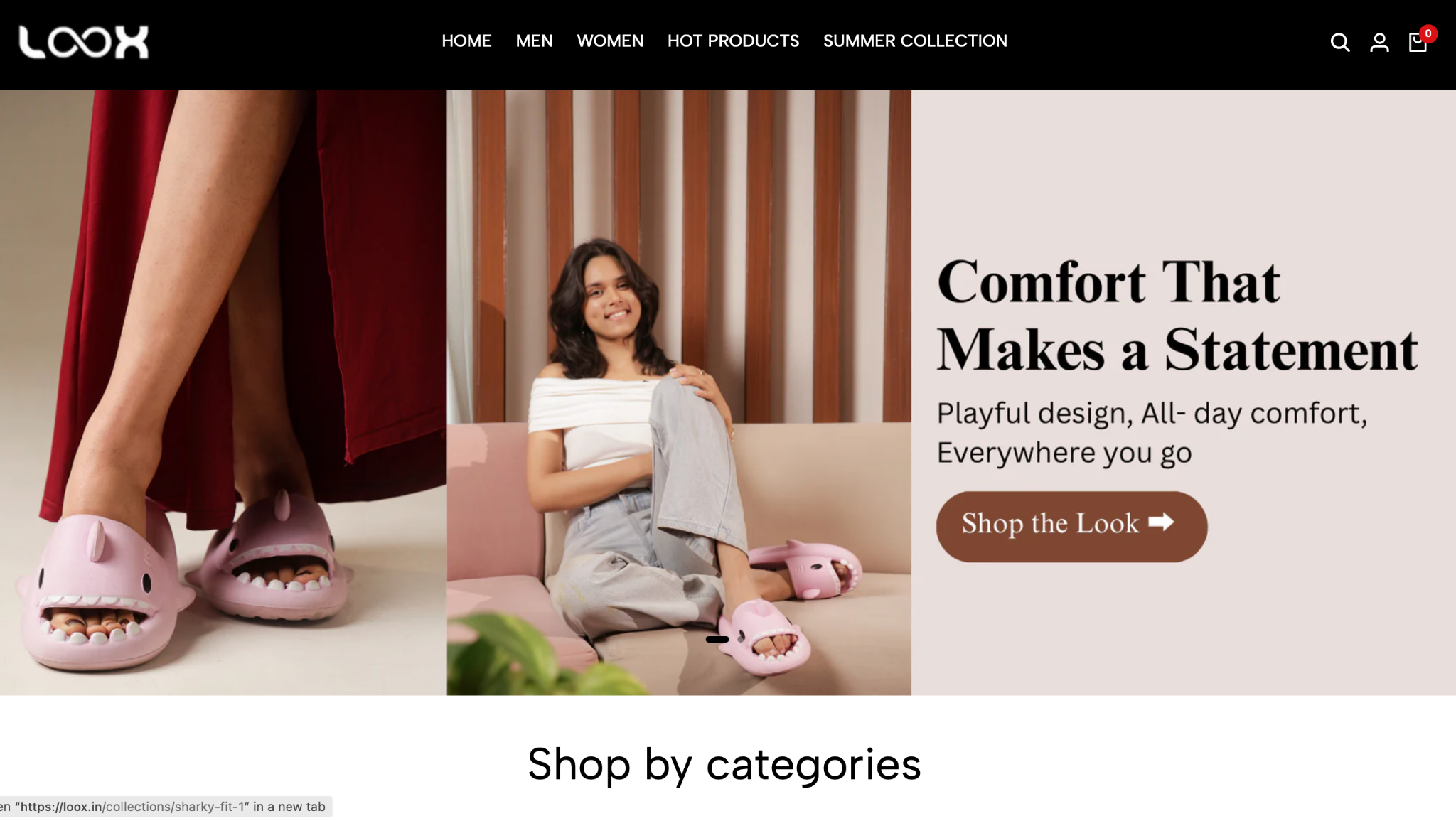
Loox specializes in photo and video reviews, perfectly suited for fashion's visual nature, encouraging customers to upload real outfit photos that double as social proof and merchandising.
Key features:
Other apps worth considering in this category are Judge.me and Yotpo.
Fashion has the highest return rate of any ecommerce category, often 25–40%. A great return experience can convert a refund into an exchange and a one-time buyer into a loyalist.
Loop Returns is purpose-built for fashion brands, designed to convert returns into exchanges and store credit while delivering a polished post-purchase experience that actually deepens loyalty.
Key features:
Other apps worth exploring are AfterShip Returns and Return Prime.
The strongest fashion brands don’t just use apps — they build connected systems. Merchandising improves product discovery, replenishment prevents stockouts, retention drives repeat purchases, and analytics guide smarter decisions. Together, these tools create compounding growth.
The real challenge today isn’t app selection — it’s managing disconnected data across multiple dashboards.
This is where AI agents powered by MCP (Model Context Protocol) become valuable. Instead of switching between inventory, CRM, analytics, and returns tools, AI agents can orchestrate workflows from one place. Questions like Which SKUs need reordering?, Why are returns rising?, or What products deserve promotion? can turn into automated actions across your ecommerce stack.
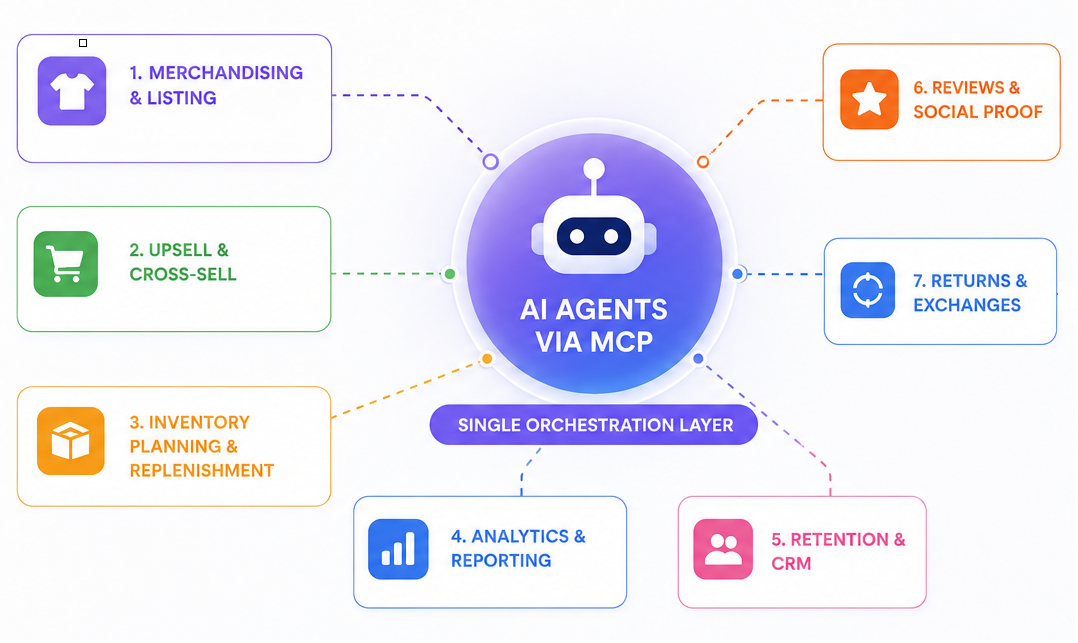
The future of ecommerce operations isn’t more software — it’s intelligent agents coordinating existing systems.
Start with the categories where your brand loses the most value, then expand as you scale. Over time, the right stack becomes a competitive advantage rather than an operational burden.
Stay tuned for the launch of Agentic Category Manager for Ecommerce from EasyReplenish — built to orchestrate inventory, merchandising, forecasting, and category decisions through a single AI-powered interface.